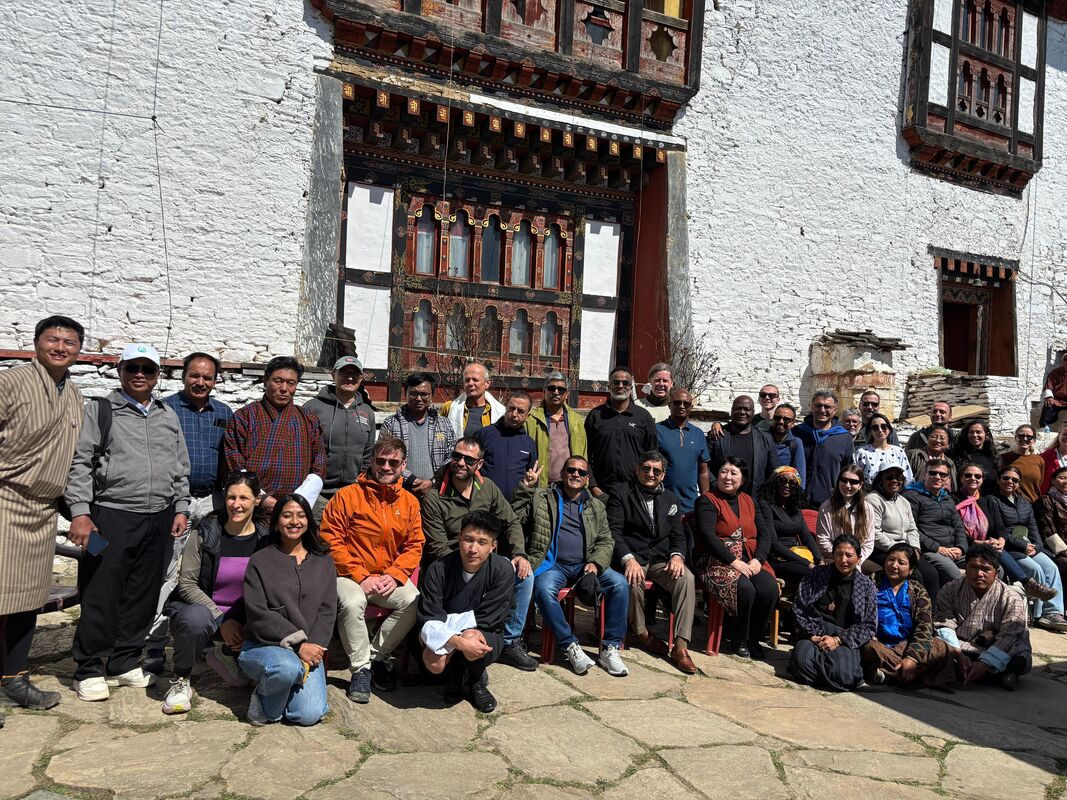
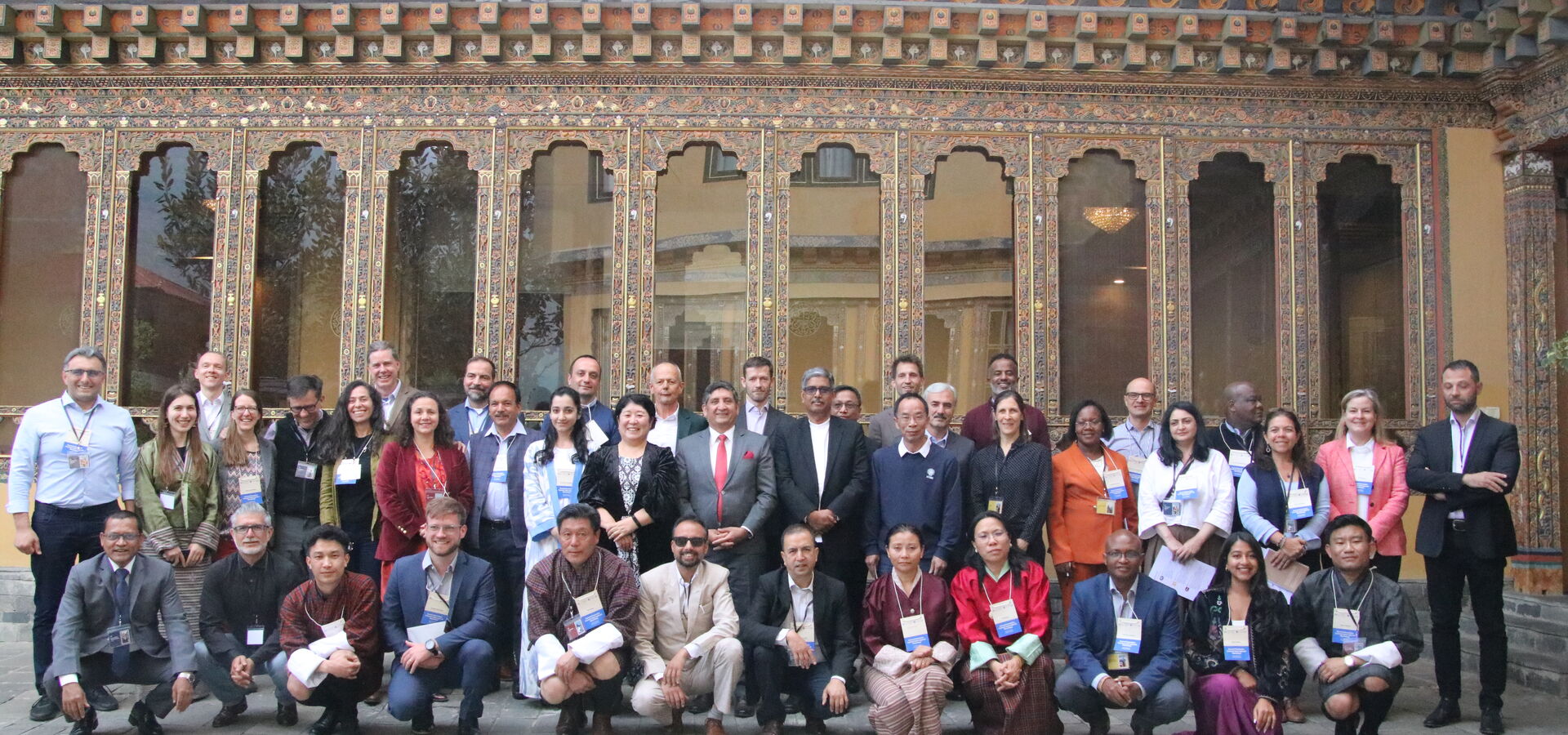
The Alpine Convention recently participated in the Second Interregional Mountains Connect Workshop in Thimpu, Bhutan, co-organised by UNEP and ICIMOD, together with the Royal Government of Bhutan as part of the Adaptation at Altitude programme, funded by the Swiss Agency for Development and Cooperation.
The workshop from 20-22 April provided a platform for discussing the most recent knowledge on climate change adaptation and governance in mountain regions. Over 50 participants from 32 countries came together to (re)connect after the first workshop in 2022 and to deepen exchanges and learnings on regional mountain range governance.
The workshop included a session on the two governance dimensions “Institutional formality and territorial identity”, organised by a representant of the Permanent Secretariat and Dr. Mathias Ulrich from the German Environment Agency.
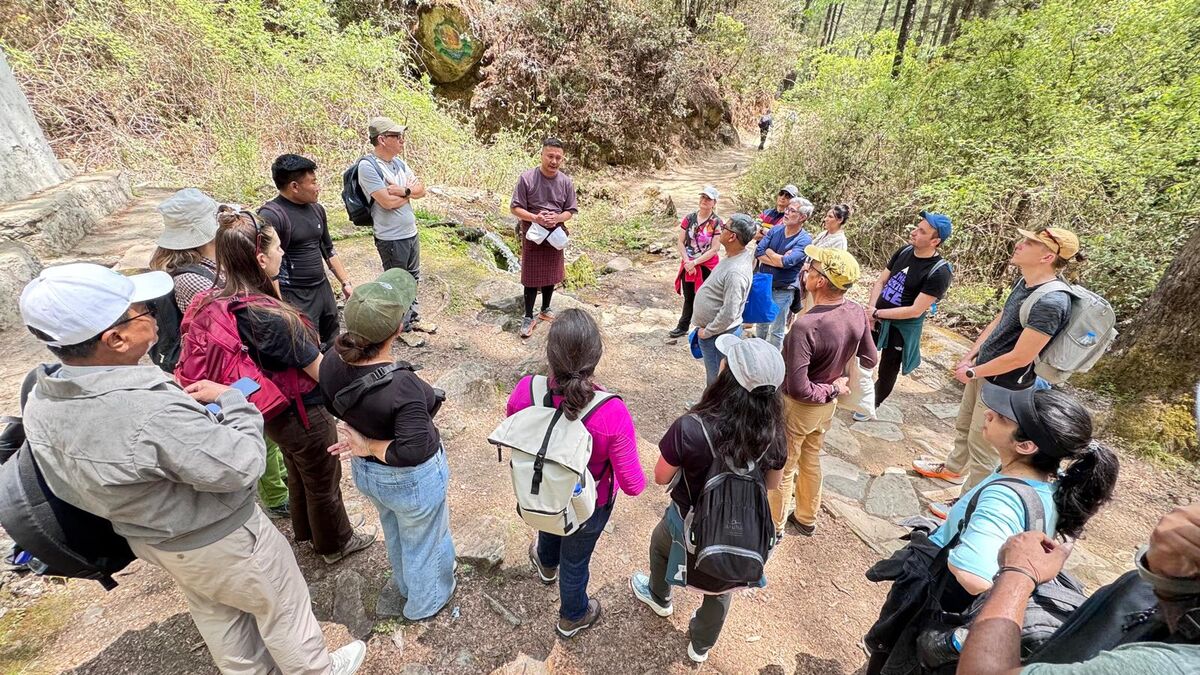

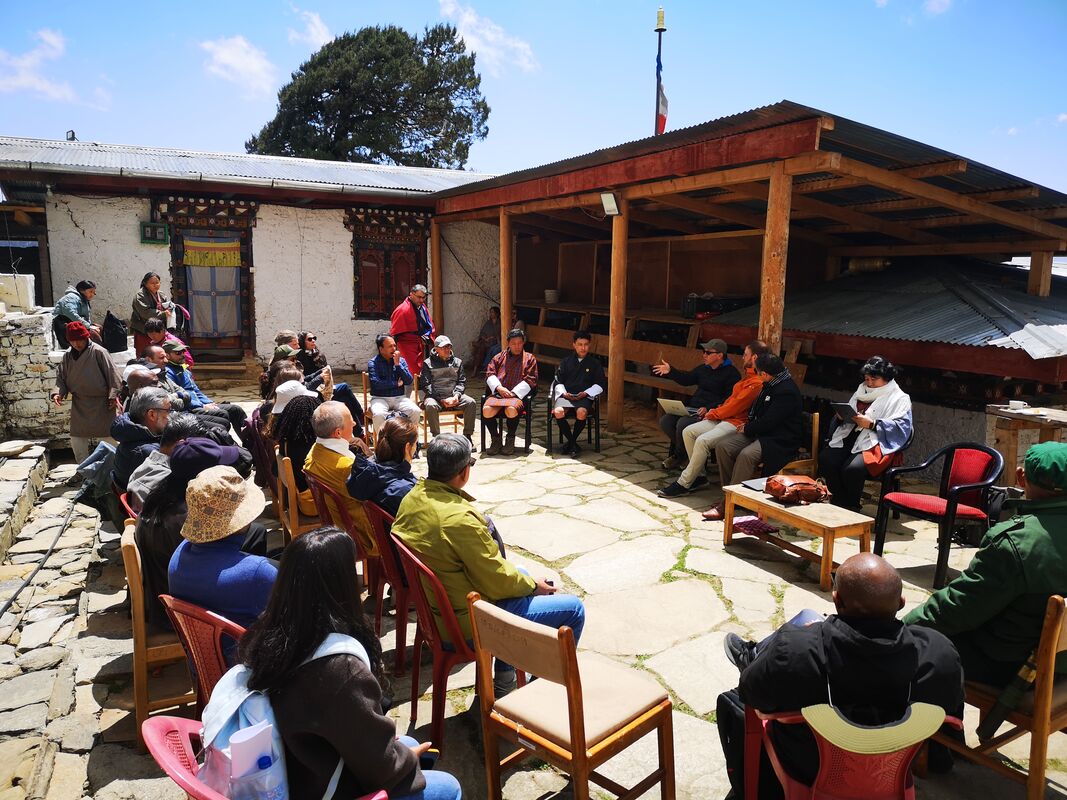
The event also featured a simulation game, Tamlar 2.0, in which participants were able to view a thematic issue from multiple perspectives, reflect on the complexities of regional mountain range governance and practise collaborative decision-making in a transboundary context.
During a field visit at the Jela Dzong participants had the opportunity to learn about the daily lives of local yak herders in the framework of the International Year of Rangelands and Pastoralists, and discussed the topic of resilient mountain development at the global level – taking into account common challenges posed by climate change and the consequences for mountain communities.
High-altitude regions around the world are among the most vulnerable to climate change and face numerous shared challenges. Consequently, a key message reiterated at the close of the event was that interregional cooperation on climate change adaptation must be strengthened, as must governance in mountain regions.